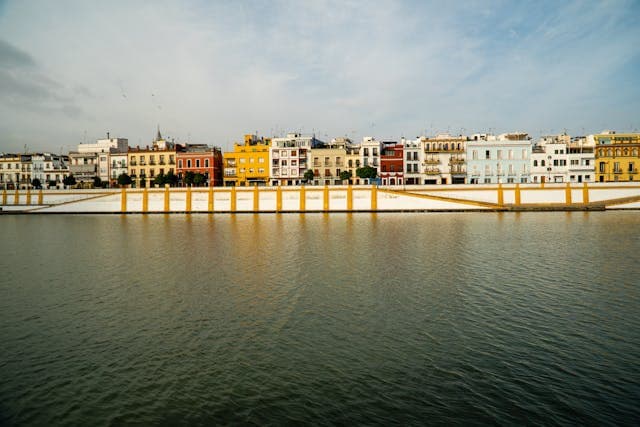
Triana: The Side of Seville That Considers Itself a Separate City
Birthplace of flamenco, home of the city's best ceramics, and proud enough of its identity that residents still say they're 'going to Seville' when they cross the bridge.
Cross the Puente de Isabel II and you are, depending on who you ask, no longer in Seville. Triana residents still say they are “going to Seville” when they cross the bridge. It is a joke that contains a real truth. This neighbourhood has always been culturally apart — and proud of it.
Where flamenco came from
Triana is not just associated with flamenco. It is where the art form was born and developed. The gitano (Roma) community that lived here created something that spread across Spain and eventually across the world. The term pata negra — used to describe the most authentic, deeply-rooted flamenco — came from here. That distinction still matters to people who care about it. If you plan to see flamenco while in Seville, read the guide to real flamenco in Seville first — it explains the difference between the tourist shows and the actual thing.
Ceramics
The distinctive azulejo tiles you see all over Seville — blue and white, sometimes turquoise, painted with intricate geometric patterns — were largely made here. The clay along the Guadalquivir bank was ideal for it. You can still visit working ceramic workshops on Calle Antillano Campos. Cerámica Santa Ana (Plaza Callao, 18) has been operating since 1870. It is the real thing, not a souvenir shop — though you can buy from them.
Mercado de Triana
An indoor market built on the site of the old Castillo de San Jorge — the inquisition castle. Beneath it you can visit the castle museum for free, which almost nobody does and which is genuinely interesting. The market itself has good produce stalls and better tapas bars around the edges than anything comparable in the tourist centre.
Santa Ana church
The oldest church in Seville, built in the 13th century. Not a museum — a working church. The retablo is remarkable and almost nobody stops because the big attractions are all on the other side of the river.
How to spend a half-day here
- Cross the Puente de Isabel II on foot — the views from the bridge are good
- Walk down Calle Betis along the river — every bar has a terrace facing Seville
- Visit Mercado de Triana mid-morning for breakfast or coffee
- Stop into Cerámica Santa Ana (Plaza Callao, 18)
- Lunch at Bar Las Golondrinas (Calle Antillano Campos, 26) — proper, cheap, no frills. Also featured in the best tapas bars in Seville guide
- Do not cross back until after sunset
Enjoyed this? Get the full Seville guide.
Itineraries, local tips, and the places I've been meaning to write about — delivered to your inbox.
Free, always. Unsubscribe any time.