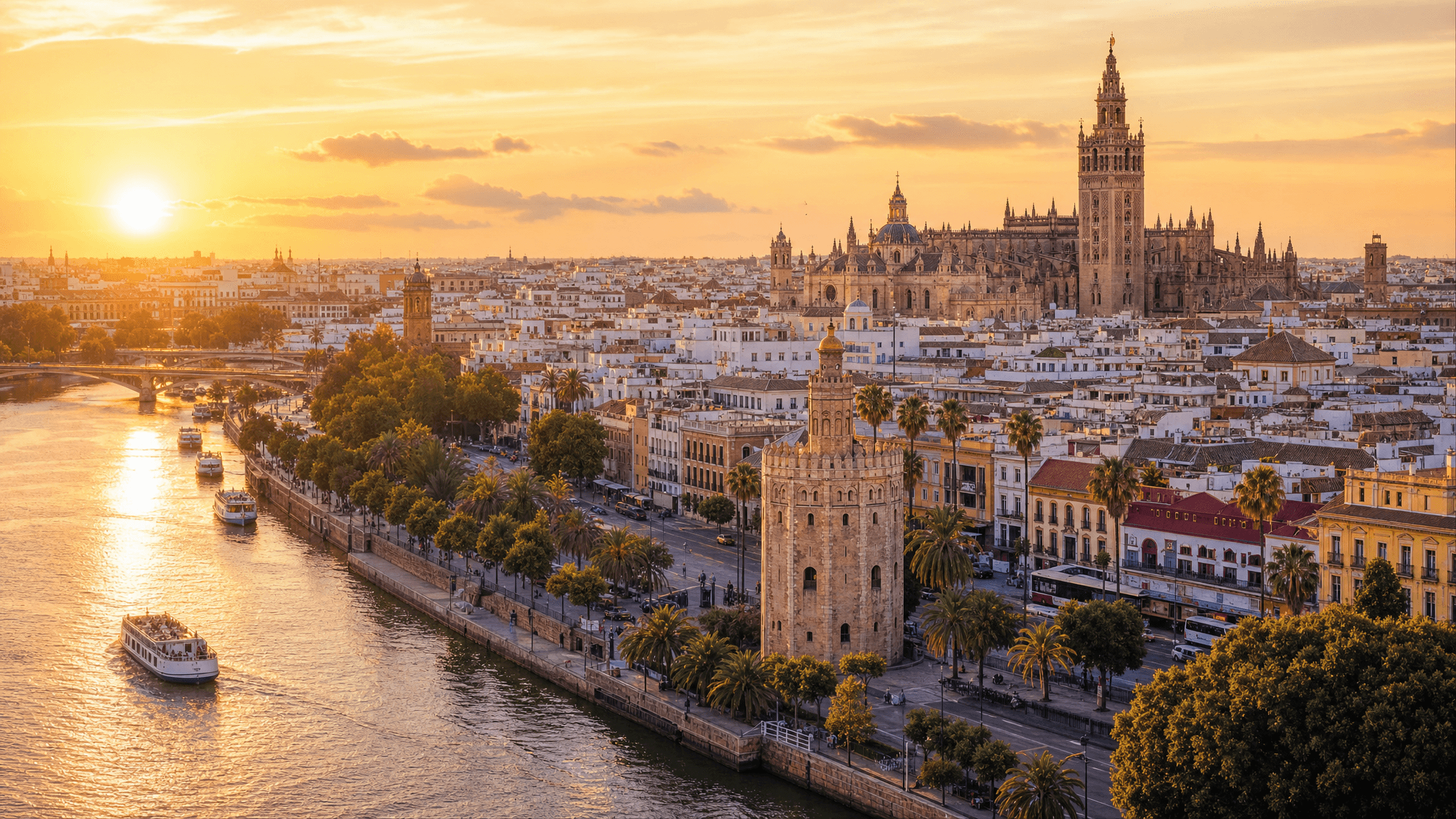
Best Time to Visit Seville - And When to Avoid It
The best time to visit Seville is October — fewer crowds, 26°C, cheap hotels. Month-by-month breakdown with Semana Santa and Feria de Abril dates.
Most articles about the best time to visit Seville will tell you “spring and autumn are lovely, summer is hot, winter is mild.” That's technically true and completely useless. It doesn't tell you that April during Semana Santa is the most chaotic week in Andalusia. It doesn't tell you that October is practically empty, costs half as much, and still hits 27°C (81°F). It doesn't tell you when to book, when to bail, and when to stop agonizing and just go.
This is that guide.
The Honest Answer
The best time to visit Seville for most travelers is mid-October to mid-November. You get warm, comfortable temperatures, almost no crowds, lower hotel prices, and the city actually breathing. Locals are back from their summer holidays. The terraces are full but not rammed. You can walk into a restaurant without a reservation.
The second-best window is late February to mid-March — before the Easter crowds arrive. Weather is mild (highs around 19–22°C / 66–72°F), hotels are cheap, and the city looks stunning in the winter light.
If you specifically want to experience Semana Santa or Feria de Abril, go during those events. But go in knowing what you're signing up for: hotels booked out months in advance at double the normal rate, streets packed solid, and logistical chaos that is also genuinely extraordinary. Worth it once. Not twice.
Seville: Best of the City Walking Tour
Covers the Alcázar exterior, Cathedral, Santa Cruz quarter, and the key viewpoints — all with a local guide who knows the context. Best-rated general Seville tour on GetYourGuide.
Month-by-Month Breakdown
January — Mild, Quiet, Cheap
Average high: 17°C (62°F). Average low: 6°C (42°F). Rainfall: 65mm over 6 days.
January is the least-visited month and also the least bad. Most days are sunny and mild enough for a coat and a coffee on a terrace. Nights are cold — proper cold, not tourist-cold. Pack layers. Hotel prices are at their annual floor: you can find decent 3-star places for €60–80/night in the historic centre. The cathedral and Alcázar have walk-in availability. The downside is occasional stretches of grey, windy rain. Not ideal, but survivable.
February — The Quiet Gem
Average high: 19°C (66°F). Average low: 7°C (44°F). Rainfall: 50mm over 6 days.
Warmer than January with slightly better weather odds. Some years, February throws you a 25°C (77°F) freak spring day. Crowds remain minimal. If Semana Santa falls late (check the year), February is the last truly cheap month before prices start climbing. Good month for the serious museum visitor — Museo de Bellas Artes, no queue at either.
March — Best Value Sweet Spot
Average high: 22°C (72°F). Average low: 9°C (48°F). Rainfall: 35mm over 4 days.
March is excellent. Comfortable temperatures, orange blossom starting to bloom, daylight extending, and prices still reasonable — until Semana Santa arrives. In 2026, Easter falls on April 5, meaning Semana Santa runs March 29–April 5. Book a March trip and you might catch the final preparations: the procession floats (pasos) being rehearsed in church doorways, the city tensioning before the release. Or you miss it entirely and just have a lovely, uncrowded visit.
In 2027, Semana Santa runs March 21–28. If you're planning for that year, early March is your safe window. After March 20, you're in it.
April — The Big One (Plan Accordingly)
Average high: 24°C (75°F). Average low: 11°C (52°F). Rainfall: 55mm over 6 days.
April is peak Seville — and peak everything else that comes with that. The month typically contains Semana Santa and/or Feria de Abril, two of the largest festivals in Europe. Semana Santa is genuinely awe-inspiring: 60+ processions over seven days, ancient brotherhoods carrying enormous floats through narrow streets at 1 AM, the entire city smelling of incense and orange blossom. Feria de Abril, held roughly two weeks later, is a six-day private party where Seville dresses up, rides horses, and drinks rebujito (sherry and 7-Up — yes, really) until sunrise.
Upcoming event dates:
- Semana Santa 2025: April 13–20 — Feria de Abril 2025: May 5–11
- Semana Santa 2026: March 29–April 5 — Feria de Abril 2026: April 20–26
- Semana Santa 2027: March 21–28 — Feria de Abril 2027: April 12–18
Hotel prices during these weeks: expect to pay 2–3x normal rates. Budget hotels that usually run €80/night will quote €200+. Book six months out minimum — a year out for Semana Santa if you have specific accommodation requirements. See our Semana Santa guide for the full logistics breakdown.
May — Underrated
Average high: 28°C (83°F). Average low: 15°C (59°F). Rainfall: 30mm over 4 days.
Once Feria de Abril ends, Seville exhales. May is warm, beautiful, and significantly less crowded than April. Temperatures are ideal — warm enough for shorts and evening drinks outside, not yet in the death-zone. Late May can push toward 35°C (95°F) on hot days, but it's nothing like summer. Good month to book guided tours — the guides are still enthusiastic, the groups are smaller. Prices sit between shoulder and high season.
June — Where It Starts
Average high: 33°C (91°F). Average low: 18°C (64°F). Rainfall: 10mm.
Hot. Not catastrophically hot, but hot. By mid-June the 38–39°C (100–102°F) days start appearing. The upside: tourist numbers drop as mass-market travelers shift to beach destinations. Hotel prices ease. If you move around in the early morning and late evening and respect the siesta logic (5–8 PM indoors), June is manageable. On paper it's worse than October. In practice, plenty of people love it.
Planning a Seville trip? Get the full guide.
Seasonal tips, local intel, and the things worth knowing before you book — straight to your inbox.
Free, always. Unsubscribe any time.
July & August — Extreme, But Not What You Think
Average high: 36°C (97°F). Average low: 20°C (68°F). July rainfall: 0mm. August: 5mm.
Seville in July and August is the hottest city in continental Europe. Average highs of 36°C (97°F) are the baseline; during heat waves it hits 42–46°C (108–115°F). These are not exaggerated numbers.
And yet: the Alcázar is quieter in August than in April. Hotels are cheaper. Restaurants aren't full. Many Sevillanos have left for the coast, which means the streets feel authentically empty rather than tourist-empty. The key is strategy: air-conditioned accommodation is non-negotiable. Start sightseeing by 8:30 AM, take a long lunch break inside, go back out after 7 PM. It's doable. It's not enjoyable in the way May is enjoyable, but it's far more manageable than the internet makes it sound.
September — The Transition
Average high: 32°C (90°F). Average low: 18°C (64°F). Rainfall: 15mm.
September starts hot and ends almost pleasant. The first two weeks still feel like summer — 33–35°C (91–95°F) days are common. By late September, the heat breaks and you get evenings you can actually enjoy outside without sweating through your shirt. Tourist crowds are still relatively low. Hotel prices start rising toward the end of the month. If you go in September, aim for the last ten days.
October — The Best Month Nobody Talks About
Average high: 26°C (79°F). Average low: 13°C (55°F). Rainfall: 50mm over 5 days.
This is it. October is the month. Warm but not hot. Empty but not dead. Prices that make sense. You can book a last-minute flight, find a decent hotel for €90–120/night in the centre, and walk through the Barrio Santa Cruz — our Santa Cruz guide has the full neighbourhood breakdown — without being swept along by a tour group. The Alcázar gardens look incredible in the October light. The tapas bars are full of locals, not other tourists. There are no major festivals crowding the calendar. It's just… Seville.
November — Still Good, Getting Quieter
Average high: 20°C (68°F). Average low: 9°C (48°F). Rainfall: 70mm over 7 days.
November is the shoulder dropping toward winter. The first half still has comfortable days — 20–22°C (68–72°F) highs, light jacket evenings. The second half gets cooler and wetter. The city is quiet. Hotel deals are easy to find. If you want Seville without another tourist in frame for your photos, mid-November will do it.
December — Christmas, Surprisingly Good
Average high: 17°C (62°F). Average low: 7°C (44°F). Rainfall: 65mm over 7 days.
Seville does Christmas well. The city decorates extravagantly — the main shopping street (Calle Tetúán and the Sierpes area) goes full festive. The Christmas markets around Plaza Nueva are worth a visit. Temperatures are mild by northern European standards. The week between Christmas and New Year is busier and pricier than the rest of December, but nothing like spring crowds.
What Most Guides Get Wrong
“Avoid summer.” That's the standard advice, and it's not wrong exactly, but it's lazy. The implication is that summer Seville is some kind of mistake. It isn't. It's a different experience — quieter, cheaper, more local — that just requires more planning. The people who hate it are usually the ones who booked a non-air-conditioned room or tried to walk to the Alcázar at 2 PM.
The bigger mistake most visitors make: treating April as a safe “spring” choice without checking whether Semana Santa or Feria de Abril land during their dates. These are extraordinary events. They're also logistical nightmares if you're not prepared. Check the dates before you book anything.
The third mistake: ignoring October because it feels “too late in the year.” For northern Europeans and North Americans, October still feels like summer in Seville. You're not going late. You're going at the right time.
How Far in Advance to Book
- Semana Santa / Feria de Abril: 6–12 months for hotels. Tours and restaurants: 1–3 months.
- April (non-festival): 2–3 months for decent central accommodation.
- May & March: 4–6 weeks is usually fine, though longer for specific boutique hotels.
- October & November: 2–4 weeks. Sometimes last-minute works fine.
- July & August: 2–4 weeks. Demand is lower and deals exist.
- January & February: Book whenever. You'll have options.
The Alcázar — our full Alcázar guide — sells out in advance year-round during spring. Book tickets online before you arrive regardless of when you go.
October and November are also the best months for day trips from Seville — Córdoba, Cádiz, and Granada are quieter and more pleasant in the shoulder season. And if you plan to see flamenco, read the guide to real flamenco in Seville before you book anything.
FAQ: Best Time to Visit Seville
What is the best month to visit Seville?
October is the best month to visit Seville for most travelers. Average temperatures of 26°C (79°F), minimal crowds, reasonable hotel prices, and no major festivals disrupting logistics make it the ideal combination. Late March (before Semana Santa) and November are close runners-up.
Is Seville too hot in summer?
Seville averages 36°C (97°F) in July and August, with heat waves reaching 42–46°C (108–115°F). It is genuinely extreme. However, with air-conditioned accommodation, early-morning sightseeing, and afternoon breaks indoors, it is manageable. Hotels and attractions are cheaper and less crowded than in spring.
When is Semana Santa in Seville?
Semana Santa runs the week leading up to Easter Sunday. Upcoming dates: April 13–20, 2025; March 29–April 5, 2026; March 21–28, 2027. Book accommodation at least six months in advance — ideally a year out — as the city fills completely.
When is Feria de Abril?
Feria de Abril takes place roughly two weeks after Semana Santa. Upcoming dates: May 5–11, 2025; April 20–26, 2026; April 12–18, 2027. Hotel prices during Feria are 2–3x normal rates. Book well in advance.
Is December a good time to visit Seville?
Yes. December in Seville is mild by northern European standards (17°C / 62°F average high), quiet, and festively decorated. It's a genuinely good option for travelers who want to avoid crowds and don't mind cooler evenings. Avoid the Christmas week if you want the lowest prices and fewest tourists.
Enjoyed this? Get the full Seville guide.
Itineraries, local tips, and the places I've been meaning to write about — delivered to your inbox.
Free, always. Unsubscribe any time.