2 Days in Seville: The Perfect 48-Hour Itinerary
Two days in Seville — here's exactly how to spend them. Alcázar, Triana, tapas, and one great flamenco show. No fluff, no rushing.
2 Days in Seville: The Perfect 48-Hour Itinerary
You have 48 hours. Most itineraries will send you to five neighborhoods, two day trips, and a rooftop bar before you've finished your first coffee. This one won't. Two days in Seville, done properly, means fewer places and more of each. It means arriving at the Alcázar when the light is still low and the crowds haven't arrived. It means having lunch with nowhere else to be. It means leaving having actually seen Seville, not just ticked it.
Here's exactly how to spend your Seville itinerary across 2 days — structured, specific, and honest about what's worth your time and what isn't.
The Mistake Most Visitors Make
They try to do everything. The Alcázar, the Cathedral, the Giralda, Triana, Plaza de España, a flamenco show, and a tapas tour — all in one day. Then they wonder why they feel vaguely cheated.
The Alcázar and the Cathedral are not quick stops. They're two of the most extraordinary buildings in Europe. Rushing through them back-to-back while dehydrated and checking your phone for the next thing is not sightseeing. It's box-ticking.
The fix is simple: give the monuments the whole morning on day one. Save the neighbourhoods for when your legs are fresh and your mind is clear. This itinerary is built around that logic.
Day 1: The Monuments Done Right
Morning: Real Alcázar + Seville Cathedral
Start with the Real Alcázar. Book the first entry slot — 9:30 AM, or 9 AM in summer. This is not a suggestion. By 11 AM the courtyards are packed. By noon the tour groups have arrived in full force, earpieces and all. The first hour inside the Alcázar, when the light hits the Mudéjar tilework at a low angle and you can actually hear the fountains, is a different experience from the one most people get.
General admission is €14.50 for adults. Children under 16 get in free with valid ID. Book directly on alcazarsevilla.org — don't bother with third-party resellers for the basic ticket.
Budget two hours. One for the palace rooms, one for the gardens. The gardens are the part most visitors rush, which is a mistake — there are corners back there that feel genuinely private. Don't miss the Galería del Grutesco or the Jardín Inglés.
Walk three minutes west to the Cathedral and Giralda. If you booked your Alcázar slot for 9:30 AM, aim for an 11:30 AM or noon Cathedral entry. Tickets are €13 online (€14 at the door) and include the Giralda climb and entry to the Iglesia del Salvador. Book at catedraldesevilla.servitickets.es.
The Cathedral is the largest Gothic building in the world. That fact alone should earn it 75 minutes of your time. The Giralda tower is ramps, not stairs — it was designed so the muezzin could ride a horse to the top. The view from up there, with the city laid out flat in every direction, is the best free orientation you'll get all weekend. (It's not free, but it's included in your ticket, so close enough.)
Afternoon: Barrio Santa Cruz
You're done by 1:30 PM. You've seen two of Europe's great monuments. You're hungry and your feet are starting to register a complaint. This is the moment Barrio Santa Cruz was made for.
The old Jewish quarter is directly east of the Cathedral. The streets are deliberately confusing — they were designed that way, originally for defensive purposes. Don't fight it. The point of Santa Cruz is to get lost in it. Follow whatever alley looks interesting. You'll find courtyards with orange trees, ceramic plaques, cats sitting in doorways. You can't really go wrong.
Have lunch here. Check our guide to the best tapas bars in Seville for specific places in the area. In general: anything with a handwritten menu on the wall and locals at the bar is a good sign. Anything with photographs of the food on the menu is not.
After lunch, find the Plaza de los Venerables. Walk down Calle Agua, which runs along the old wall of the Alcázar gardens. Stop at the Plaza de Santa Cruz itself — there's a wrought-iron cross in the middle that dates from 1692. Then do nothing for 20 minutes. That's the right pace for the afternoon.
Evening: Tapas Crawl
Spaniards don't eat dinner before 9 PM. You shouldn't either. Use the gap between 6 and 9 PM to graze — one tapa here, one glass of fino there. This is the correct way to experience Sevillano food culture, and it's considerably more pleasurable than sitting down to a formal dinner at 7 PM surrounded by other tourists.
Calle Mateos Gago, just outside the Cathedral, is the obvious starting point — the bars spill onto the street and the energy is good in the early evening. Work your way through the neighbourhood. El Rinconcillo on Calle Gerona is the oldest bar in Seville (1670, allegedly) and worth a stop for the atmosphere alone, even if the tapas are more functional than remarkable. For the serious eating, again: the tapas guide.
Day 2: The Local Side of Seville
Morning: Triana
Cross the Puente de Triana (officially the Puente de Isabel II — a mid-19th century iron bridge built by the same engineer who worked on the Eiffel Tower's foundations). On the other side is Triana, which has spent centuries being proudly not the historic centre.
Go straight to the Mercado de Triana. It's a covered market right at the foot of the bridge, built on the site of the old Castillo de San Jorge. Have breakfast here — coffee and a tostada con tomate, or whatever looks good. The market closes around 2 PM, so get there while it's running.
After the market, walk south along Calle Alfarería and the surrounding streets. Triana has been producing tiles and ceramics for centuries — several workshops are still operational, and you can watch potters at work. If you're going to buy anything in Seville, buy it here rather than in the souvenir shops around the Cathedral.
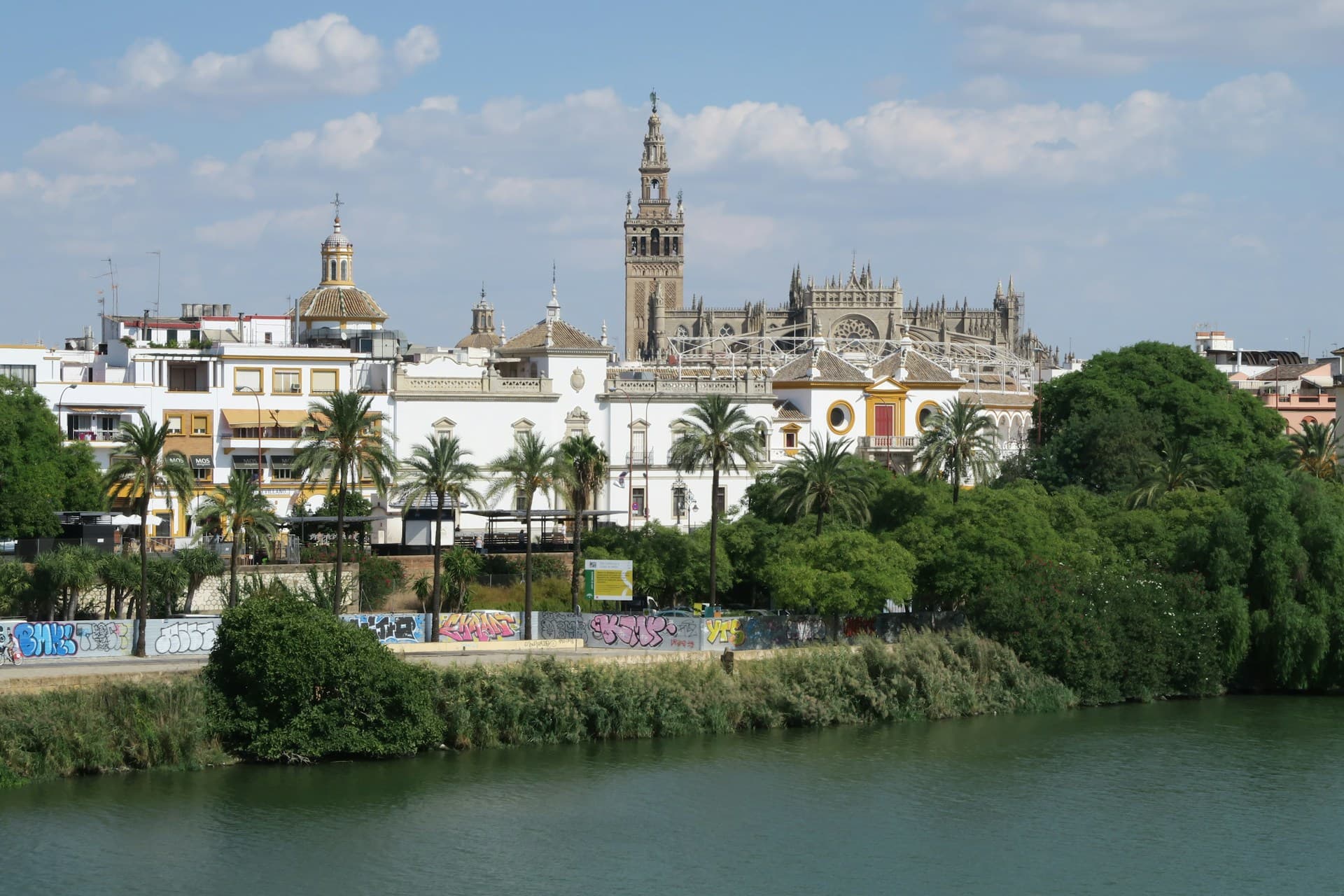
Then walk along Calle Betis, which runs parallel to the river on the Triana side. The views back across the Guadalquivir toward the Torre del Oro and the Cathedral tower are some of the best in the city. This is also where half of Seville comes to drink on Friday nights. On a weekday morning it's calm. Take advantage.
Afternoon: Plaza de España
Cross back over the river and head south to Plaza de España. It's a 20-minute walk from Triana, or a short Uber ride if you've already done enough walking.
The plaza was built for the 1929 Ibero-American Exposition and is, objectively, absurd in the best way — a semi-circular building 500 metres across, with a canal running around the perimeter, tiled alcoves representing every province of Spain, and bridges with ceramic balustrades. It looks like someone designed a film set and then accidentally built it at full scale. (Several films have actually been shot here, including Lawrence of Arabia and the Naboo scenes from Star Wars.)
You can rent rowing boats for the canal — around €6 for 35 minutes. Do it. It's one of those things that sounds mildly touristy until you're actually on the water at 4 PM with the late sun on the tilework and you have to admit it's genuinely lovely.
The María Luisa Park adjoins the plaza. Walk through it on your way back. There are peacocks. Nobody warns you about the peacocks.
Evening: Rooftop Sunset + Flamenco
Get back to the centre by 7 PM and head to a rooftop. The EME Catedral hotel on Calle Alemanes has one of the best terraces in the city — eye-level with the Giralda, open to everyone (drinks aren't cheap, but the view earns it). The Hotel Doña María rooftop next door is another option with pool access in summer.
Watch the city turn gold and then go to a flamenco show.
For flamenco, two options worth your time. Casa de la Memoria (Calle Cuna, 6) is a 15th-century palace courtyard, 80 seats maximum, no microphones — the room is small enough it doesn't need them. Tickets are around €20. Book weeks ahead; it sells out. La Carbonería (Calle Levíes, 18) is the free option — a peña-style bar in Santa Cruz that puts on flamenco most evenings from around 22:30. Quality varies, but on a good night it's the real thing. No booking required, just show up. For the full breakdown of what to see and what to skip, read our flamenco guide.
Practical Information
- When to visit: March–May and September–October are the best months. Seville in July and August is genuinely extreme — temperatures regularly hit 40°C and above. If you're going in summer, start before 10 AM, disappear between 2–5 PM, and come back out in the evening. See our guide on the best time to visit Seville.
- Booking: Book the Alcázar and Cathedral tickets well in advance — minimum two weeks in peak season (March, April, Holy Week, October). Both sell out. The Alcázar especially: do not turn up without a ticket and expect to get in the same day.
- Alcázar ticket: €14.50 adults, free under 16 with ID. Book at alcazarsevilla.org.
- Cathedral ticket: €13 online, €14 at the door. Includes Giralda tower and Iglesia del Salvador. Book at catedraldesevilla.servitickets.es.
- Getting around: The historic centre is compact. You can walk almost everywhere in Day 1. Uber and Cabify work well in Seville and are cheap by northern European standards. There's also a tram line connecting the main sights, but honestly you'll walk more often than you take it.
- Where to stay: Anywhere within 15 minutes walk of the Cathedral puts you in striking distance of everything on this itinerary. Santa Cruz itself is quietest in the morning (the day-trippers haven't arrived yet) and noisiest after dark. El Arenal, just west of the Cathedral, is a good compromise.
- Money: Budget around €60–80 per person per day for food, drinks, entry, and a flamenco show. More if you're eating well. Less if you're sticking to tapas and market lunches.
Insider Tips
- The Alcázar gardens are underrated. Most people rush through them on the way out. Budget at least 45 minutes and go to the back sections, past the Jardín del Estanque de Mercurio. There are fountains, peacocks (again with the peacocks), and shaded corners where you can sit down without anyone bothering you.
- Monday afternoons, the Alcázar is free for EU citizens. This only applies in the off-season (roughly November to March), and the queue of people who know about it can be longer than you'd expect — but it's free.
- The Triana market closes by 2 PM. Don't wander over at 3 PM and wonder why it's shut. Get there before noon.
- Semana Santa changes everything. If you're visiting during Holy Week, read our Semana Santa guide before you book anything. The city is extraordinary during that week, but also completely transformed — streets are closed, schedules shift, and accommodation prices triple. Plan accordingly.
FAQ: 2 Days in Seville
Is 2 days enough time in Seville?
Yes — if you focus. Two days is enough to see the Alcázar, the Cathedral, Barrio Santa Cruz, Triana, and Plaza de España, with time for decent meals and an evening of flamenco. You won't see everything, but you'll see the best of it properly.
What is the best order for visiting the Alcázar and Cathedral?
Do the Alcázar first. It opens at 9:30 AM (9 AM in summer) and crowds build fast. Book the first entry slot, spend two hours there, then walk three minutes to the Cathedral for an 11:30 AM or noon slot. Both buildings are closed to tourists during religious services, so first thing in the morning is the safest approach.
Do I need to book Seville attractions in advance?
For the Alcázar: absolutely yes. It sells out days in advance in high season. For the Cathedral: strongly recommended. For flamenco shows: book at least 2–3 days ahead. Nothing here benefits from turning up on spec.
How much does a weekend in Seville cost?
Budget roughly €60–80 per person per day, all-in (entry tickets, food, transport, one flamenco show). Alcázar is €14.50, Cathedral is €13 online. A flamenco show at Tablao El Arenal starts at €45 with a drink included. Food is relatively cheap by western European standards — a proper tapas dinner with wine shouldn't cost more than €25–35 per person at a good local bar.
Is Seville walkable?
Almost entirely, for this itinerary. The Alcázar, Cathedral, Barrio Santa Cruz, and El Arenal are all within 10 minutes walk of each other. Triana is a 15-minute walk across the bridge. Plaza de España is the furthest at about 25 minutes from the centre, or a short taxi ride. Wear shoes you can walk in for 4–6 hours a day.
Enjoyed this? Get the full Seville guide.
Itineraries, local tips, and the places I've been meaning to write about — delivered to your inbox.
Free, always. Unsubscribe any time.